This is a guest blog written by Vicars School curriculum consultant Eric Purves.
Eric holds an MSc in rehabilitation science from UBC. He founded the Centre for Evidence-Based Education, which offers a wide range of courses for RMTs and other manual therapists. He is also on the faculty of Pain BC and hosts the Massage Science with Eric Purves podcast.
Eric supports the Vicars School curriculum development team, ensuring our students learn the most up-to-date training in pain management, rehabilitation principles, and evidence-based strategies for client care.
Many people think a massage therapy treatment starts when they lie down on the table–they’re wrong. What sets great RMTs apart is the work that happens before and after the massage itself: the assessment, treatment planning, charting, and home care plan.
That’s why RMTs must stay current on the latest evidence-based assessment concepts, communicate them to clients, and engage in a shared decision-making process to create a meaningful treatment plan. Adopting these practices directly increases the therapeutic impact of your hands-on work.
The importance of evidence-based assessment
An evidence-based assessment integrates appropriate orthopaedic tests with validated outcome measures to accurately track patient progress. Knowing which tests to use—and which to avoid—is crucial for tailoring your approach to the patient’s specific presentation.
Integrating this routine raises your quality of care and streamlines your processes, leading to more predictable patient outcomes.
Accurate assessments facilitate robust, objective-focused treatment plans, allowing for continual re-evaluation. This collaborative process empowers both you and the patient to actively manage their recovery.
Quality over quantity: simplify your assessment
To maximize clinic time without sacrificing clinical depth, simplify your assessment process to focus on high-yield data.
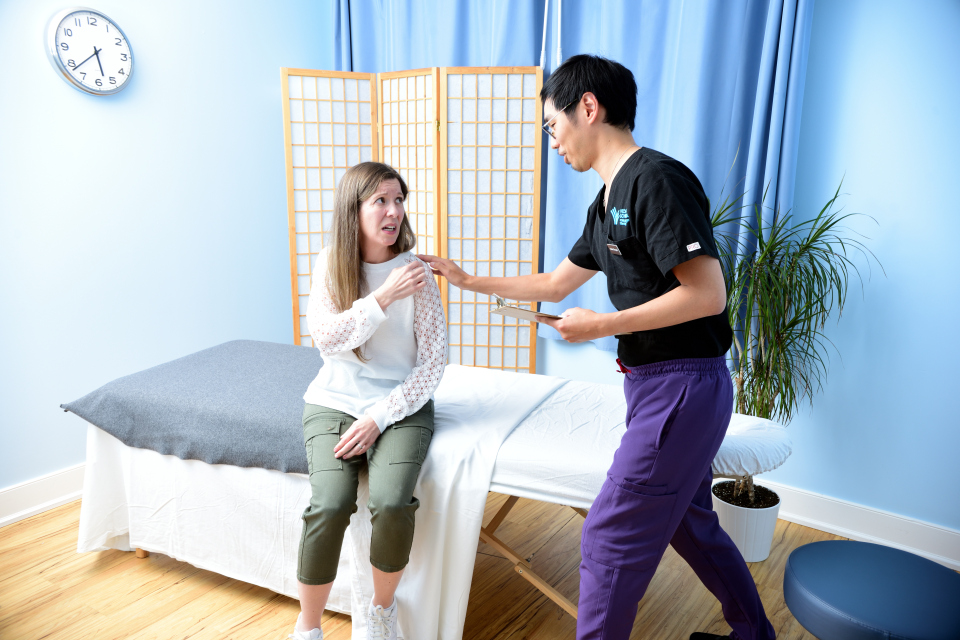
The most effective assessment tool in a clinical environment is the patient interview. This important first step in assessment is the cornerstone of patient-centred care. It is essential for building a strong therapeutic relationship, resulting in more consistent outcomes.
Ask open-ended questions. Pay attention to how your client describes their reasons for coming in and their goals for the treatment. For example, replace ‘Where does it hurt?’ With questions from the list below.
Functional goal questions
To shift your assessment from purely anatomical findings to functional outcomes, incorporate these types of open-ended questions into your client interview:
- “What is the primary activity you are unable to do right now due to this discomfort?”
- “On a scale of 1-10, how much does this pain interfere with your ability to lift your child or work at your desk?”
- “What does a ‘successful’ outcome for today’s treatment look like to you?”
- “How has this discomfort affected your pleasure of driving, playing piano, or going for walks?”
- “How has this pain changed your ability to sleep through the night?”
Shifting your focus to functional goals allows you to reduce your reliance on less reliable objective testing. Though these tests are important tools, they’re not perfect. Because they’re manual and somewhat subjective, they can have a high margin of error and can give false positives or negatives. Also, depending on the test, they may not be sufficiently specific to the intended structures to give definitive results.
Testing still has value, but therapists need to know their drawbacks and adopt more reliable and functional measures for longer-term outcomes.
Save time by charting more effectively
Clear communication to patients and other clinicians begins with how you chart.
Adopting an evidence-based approach to charting takes less time, is easier for clinicians and patients to understand, and enables you to monitor outcomes accurately and adjust treatment plans efficiently.
This also allows you to communicate effectively with insurance companies when seeking treatment approvals and treatment extensions.
Modern evidence-based standards simplify and improve traditional charting methods. Palpation findings, muscle tonicity, joint range of motion, and pathoanatomical reasoning can all be updated with patient-centred language.
Try using a SOAP-note-inspired charting framework
- S – Subjective: What the client reports. Action: Use direct quotes regarding pain level or functional limitations (e.g., “Patient reports inability to lift coffee cup without shoulder pain”).
- O – Objective: What you measure and observe. Action: Record functional tests, not just palpation. Use range of motion degrees or validated outcome measures (e.g., “Active shoulder flexion limited to 90 degrees”).
- A – Assessment: Your clinical reasoning. Action: Connect the Objective findings to the Subjective complaints to explain the “why” behind the treatment plan.
- P – Plan: What will you do next. Action: Outline the treatment goal and frequency (e.g., “Focus on myofascial release to increase flexion; next session in 5 days”).
These best practices will help ensure your assessments are valid, your charting is precise, and your treatment plans are as effective as possible.
This approach to charting can lead to better care and improved patient outcomes. It ensures therapists accurately identify functional concerns and objectively track progress. Collecting and recording accurate information empowers you to engage patients in their own recovery by creating more personalized interventions, improving adherence to self-management, and achieving better functional outcomes.
Bridge the Gap Between Evidence and Practice
If you already have foundational massage training but want to elevate your clinical outcomes through the Vicars evidence-based approach, you may be eligible to fast-track your diploma. Skip the repeat coursework and move directly into advanced clinical training.