Behind every Olympian is a team of professionals keeping them at peak performance. And for most, that team includes a sports massage therapist.
To understand what these RMTs do—and how you could join their ranks—we spoke to two experts from the Vicars community: Olympian and graduate Neville Wright, and longtime instructor and clinic supervisor Kerri Wagensveld.

Kerri Wagensveld is a certified sports massage therapist and longtime member of the Vicars community, where she has served as instructor and clinic supervisor. An avid trail runner herself, she specializes in working with runners at all levels.
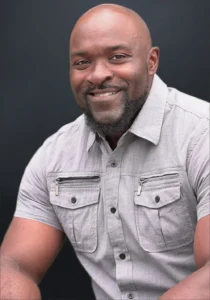
Neville Wright is an Olympian, Vicars grad, and performance massage therapist. A former sprinter and bobsledder, he represented Canada at three Winter Olympics. He now works with elite athletes—including NHL players and Canada’s men’s national soccer team—as a sport and recovery therapist.
Lesson 1: Being a good sports massage therapist starts with being a good RMT
What makes sports massage different isn’t exotic techniques. It’s context.
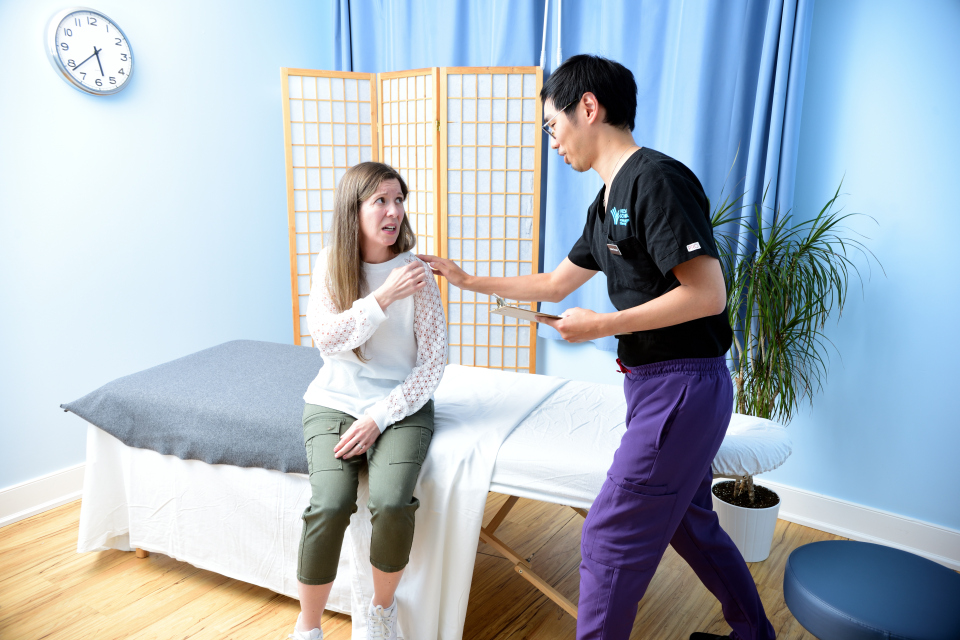
“As sport massage therapists, we take the basic foundational tools of massage therapy that every therapist learns in school, and we take them to the track or the court or whatever it is, and apply them a little bit differently,” Kerri says.
The fundamentals don’t change. The setting does.
Lesson 2: There is no such thing as a “typical” sports massage treatment
Sports therapists work with athletes during training, before or during competition, and after recovery. At each stage, the goals shift.
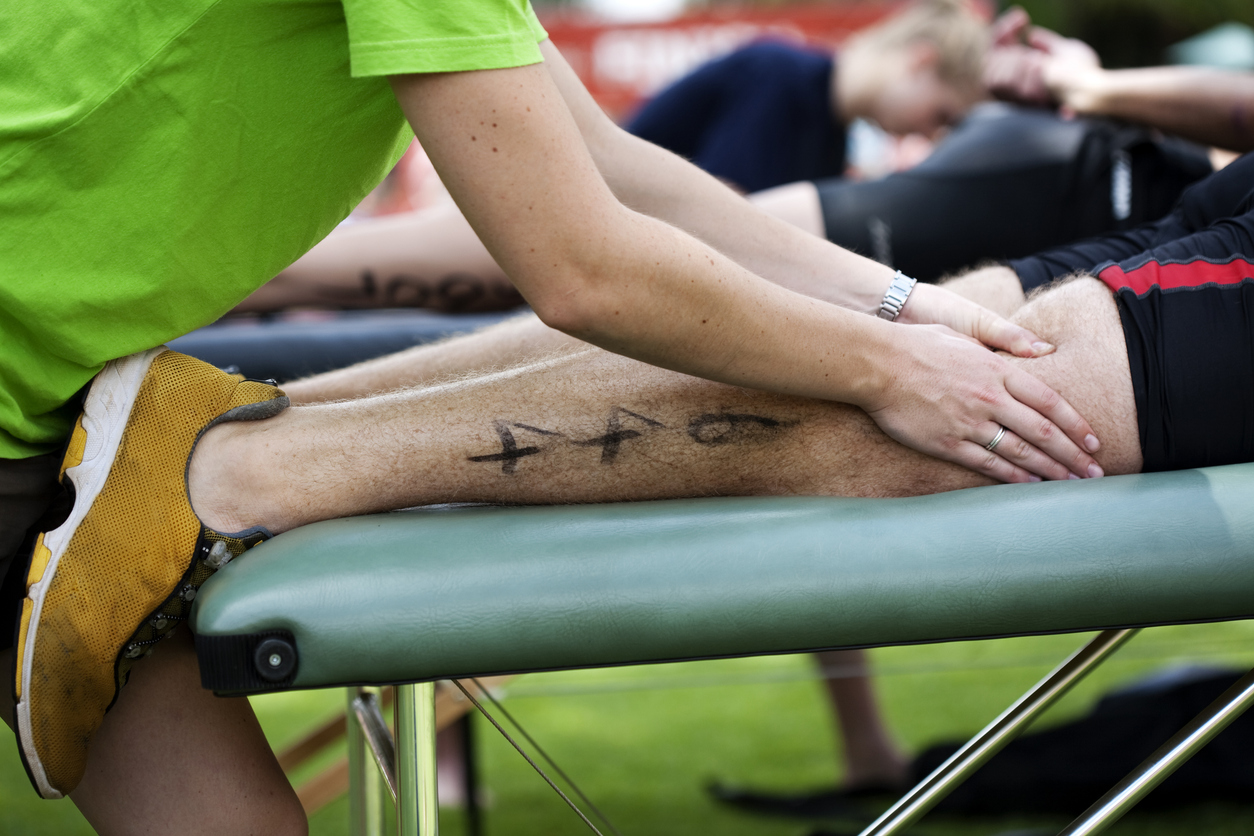
“Just before an event, we don’t want to relax an athlete’s muscles,” Kerri says. “Our techniques are going to be faster, more vigorous. In the middle of an event, we’re probably going to use similar techniques to keep their muscles going. And then post-event, maybe that’s when we can shift to the more relaxing techniques to try to settle those muscles down and help in that recovery.”
The conditions are rarely ideal.
“At a sporting event, athletes will come to you and tell you what they need or what’s going on in their bodies, and you provide a service really quickly,” she says. “You might have one minute to work on something, or you might have the opportunity to work with them for half an hour.
“They might just lie on your table, or on the ground even, and you have five minutes to get them ready. You could be working in a tent, and it’s windy, and it’s raining, and all you have are some towels, and the athletes are freezing cold.”
Neville describes similar scenes from his work with Canada Soccer.
“We might do some pre-work treatments, and then they’ll go warm up,” he says. “Then they might need something when they come in. So I’m just on standby. Then they’ll go play and come back in for the half. Someone might need something really quick—they might have an area that’s tightening up, or they can’t move a certain area well. So we’d do some mobility-based treatment right then and there.”
The constant? Responding to what the athlete needs in the moment.
“Massage therapists play a really big role,” Neville says. “We’re contributing to the recovery process. For some people, that could mean helping them come down, relax their nervous system, and getting them prepared for the next day.”
Others need something more specific.
“They might say, ‘My hip was really sore,’ and treating it might require some deeper work through there. Your work is based on what the individual needs. What does this athlete need at this moment to be able to perform at their best?”
Lesson 3: To be a good sports massage therapist, you need to understand your athletes
This is why many athletes—amateur and professional—seek out RMTs with experience in their sport.
Both Neville and Kerri are athletes themselves. Both say it gives them an advantage. “My experience allows me to connect and relate a lot with the athletes and individuals that I work with,” Neville says. “My approach to therapy does come a lot from my background, from being an athlete, being a coach, and being a therapist. I’m able to look at them with three different eyes, from three different viewpoints.”
But you don’t need an Olympic resume to build this kind of understanding. You need curiosity. “It’s about learning the sport … and learning that particular athlete’s needs, just like we would with a ‘regular’ client,” Kerri says. “I work largely with runners, so I get used to the types of injuries that a runner will have and the areas of their body that are typically going to be hurting.”
Neville describes his approach as “goal-oriented.”
“I treat them based on what their performance needs are, not just what their general health or symptom needs are.”
Ready to turn your passion for sport into a career?
It starts with the right training. At Vicars, you’ll learn the foundational skills every RMT needs—and have opportunities to specialize in areas like sports massage through clinic placements and mentorship.